
17 PhD students will develop hierarchical electrode materials for flow batteries: https://rfb-spacer.eu/
New Marie Curie Doctoral Network: SPACER

17 PhD students will develop hierarchical electrode materials for flow batteries: https://rfb-spacer.eu/

The all-iron redox flow battery (IRFB) offers a promising low-cost solution for large-scale energy storage; however, its performance is compromised by parasitic reactions, particularly hydrogen evolution. The impact of operating temperature on lab-scale cell performance is a critical yet underexplored area. This study systematically examines the influence of temperature on an IRFB utilizing a 1.5 M FeCl2, 2 M NH4Cl, and 0.2 M HCl electrolyte. Electrochemical characterization was performed over the temperature range of 20–80 °C, while lab-scale cell cycling stability was assessed over 20–50 °C. Electrochemical analysis indicated that elevated temperatures significantly enhance reaction kinetics, as evidenced by a nearly fivefold increase in the diffusion coefficient of the Fe2+/Fe3+ redox couple, rising from 1.89 × 10⁻⁶ cm2 s−1 at 20 °C to 8.93 × 10⁻⁶ cm2 s−1 at 80 °C.
Continue reading “New paper: Effects of operating temperature on kinetics and performance of iron/iron redox flow batteries”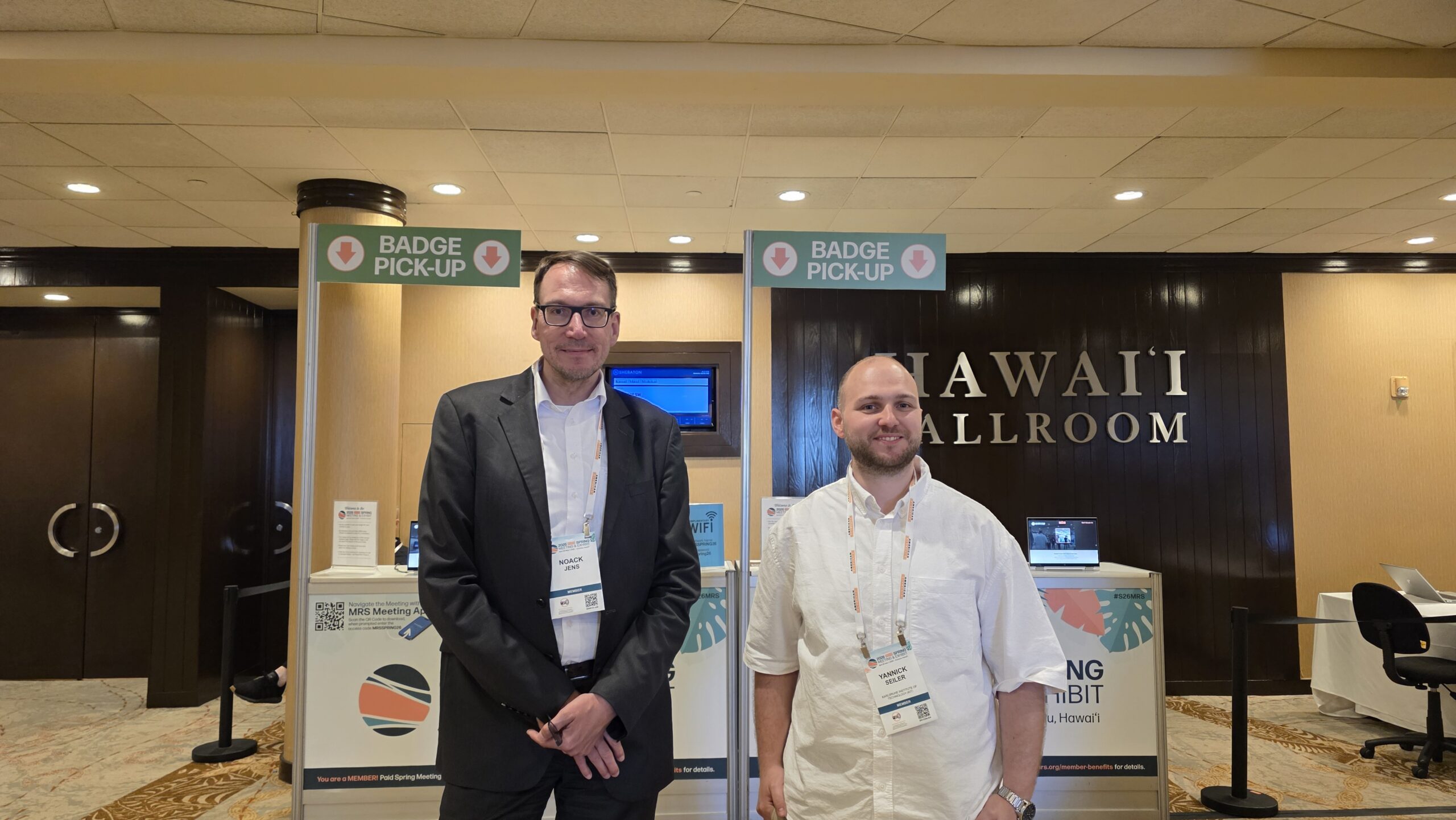
Yannick and I visited MRS Spring this week with two talks about flow batteries and a poster.
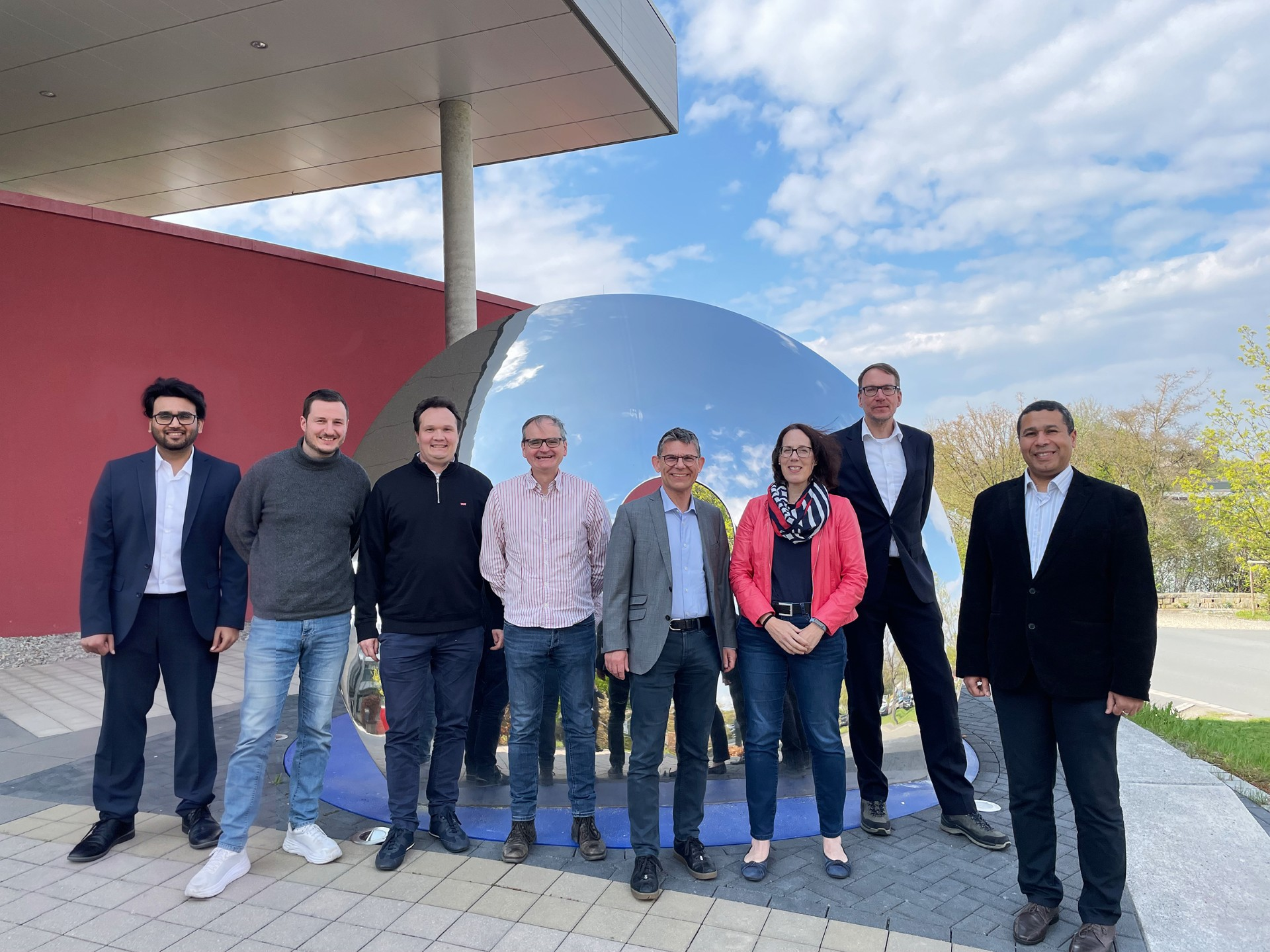
With funding from the Federal Ministry of Research, Technology and Space, Fraunhofer ICT, SCHMALZ, NONWOVEN and University Bayreuth will develop a new ultra-thin cell design for flow batteries in the coming three years. Project start was 01.04.2026.
I will give a talk about the onoing work of flow battery research and development at Fraunhofer ICT at MRS Spring 2026 at April 30th in Symposium EN05: Flow-Based Electrochemical Energy Storage Systems in Session EN05.05 Materials
https://www.mrs.org/meetings-events/annual-meetings/2026-mrs-spring-meeting-exhibit